
Priority 4: Rebuild Public Trust and Confidence
I believe trust between the public and their local police force is crucial, and I have advanced this through robust scrutiny, transparency and visible community engagement.

Freedom Of Information Requests Responded To
Subject Access Requests Responded To
Police Appeal Tribunals Administered
Reviews In Relation To Police Complaints Completed
Pension Forfeitures Dealt With
Scrutiny of Lancashire Constabulary
As the Police and Crime Commissioner, a central part of my role is to hold the Chief Constable to account for the performance of the police force. This includes ensuring that the Chief Constable delivers the strategic priorities set out in the Police and Crime Plan, uses resources responsibly, and upholds high standards of service across all areas of policing.
I carry out this responsibility through regular performance monitoring, structured meetings, and ongoing constructive dialogue focused on identifying issues and supporting continuous improvement. This approach helps ensure that the police operate efficiently, transparently, and in a way that reflects the needs and expectations of local communities.
By maintaining robust and fair oversight, I aim to strengthen public trust and confidence in policing and ensure that the Chief Constable’s leadership remains aligned with the priorities of the people we serve.
Accountability Board and Scrutiny Panels
I chaired quarterly Accountability Board meetings to scrutinise performance, with minutes published on my website.
In addition, quarterly meetings were held of the following community scrutiny and advisory boards:
- Custody Detention Scrutiny Panel
- Joint Independent Audit Committee
- Joint Independent Ethics Committee
- Joint Professional Standards Scrutiny Panel
- Stop and Search, Use of Force and Continuous Improvement Panel
- Stop and Search, Use of Force and Continuous Improvement Panel Data Meeting
The following meetings commenced or were planned in 2025/26, and will continue to meet quarterly into 2026/27:
- Joint Independent Violence Against Women and Girls Advisory Committee
- Safer Lancashire Business Partnership Joint Advisory Board
- Lancashire Violence Reduction Network Partnership Board
Minutes of all meetings are published on the OPCC website.
Complaints against the Chief Constable
I am responsible for addressing complaints, conduct matters, incidents involving death or serious injury, and non-police reform act misconduct or gross misconduct issues related to the Chief Constable of Lancashire Constabulary.
In the 2025/26 period, eight complaints against the Chief Constable were reviewed. No allegations against the Chief Constable during this period were upheld.
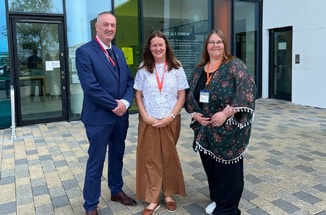
Independent Custody Visitors
The Independent Custody Visiting (ICV) Scheme, overseen by my Office, is supported by dedicated volunteers who carry out unannounced visits to police stations. Their core purpose is to check on the welfare of individuals held in police custody, review the conditions in which they are detained, and ensure that their legal rights are being properly upheld.
ICVs report any concerns identified during their visits, including issues that may require further action. Their recommendations often lead to improvements that enhance the welfare, dignity, and treatment of detainees. Any matter requiring urgent attention is raised immediately with the Custody Sergeant on duty. Through this independent scrutiny, ICVs play a vital role in maintaining public trust and confidence in policing.
As of 31 March 2026, there were 37 active ICVs participating in the scheme across the county. Between 1 April 2025 and 31 March 2026, a total of 174 ICV visits were conducted across Lancashire’s four operational custody suites: Blackpool, Blackburn, Preston, and Lancaster. During this period, ICVs spoke with or checked on 1,716 detainees, providing independent monitoring of their rights, well- being, and conditions while in custody.
Accountability Board
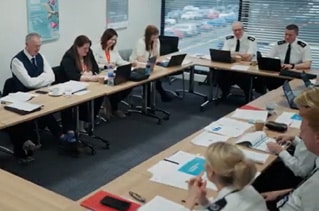
My Accountability Board is the key mechanism of my governance framework that enables me to hold to account the Chief Constable of Lancashire. I receive regular updates from the Chief Constable in respect of performance of the Force across its portfolio, and their delivery against the Police and Crime Plan. I also receive updates in relation to HMICFRS inspections/ areas for improvement, current and significant issues, and several specific reports received throughout the year. In addition, I now receive a deep dive each quarter against each of my priorities, enabling scrutiny of the delivery of my priorities and the overarching context.
Joint Independent Audit Committee
The Joint Independent Audit Committee (JIAC), which met four times during 2025/26, provides both the Constabulary and my Office independent advice and oversight regarding the adequacy of internal control, financial and risk management. The Committee provide oversight of my functions concerning their efficiency and effectiveness, as well as those of the Constabulary. At this meeting, internal and external audit findings are discussed to support compliance activity and good practice.
Joint Independent Ethics Committee
The Joint Independent Ethics Committee (JIEC) is responsible for providing independent and timely advice on moral and ethical dilemmas facing the Chief Constable and myself. Members of the Committee are responsible for supporting the implementation of the College of Policing Code of Ethics into the Constabulary and my Office and advise us on the progression of a transparent ethical framework. Members are also asked to consider ethical dilemmas to inform the ethical practice.
Joint Professional Standards Scrutiny Panel
The Joint Professional Standards Scrutiny Panel (JPSSP) is responsible for providing feedback relating to professional standards matters, including complaints, misconduct and data relating to both. Throughout 2025/26, the Panel considered 10 misconduct cases and 10 complaints cases in total and provided feedback.
Stop and Search, Use of Force and Continuous Improvement Panel
My Stop and Search, Use of Force and Continuous Improvement Panel enables scrutiny of Lancashire Constabulary’s use of stop and search and use of force powers. At the meeting, members are asked to review and provide feedback on body worn video footage of stop and search and use of force incidents. Throughout 2025/26, the Panel met four times and considered 16 stop and search cases and 16 use of force cases in total, providing feedback.
Stop and Search, Use of force and Continuous Improvement Panel Data Meeting
My Stop and Search, Use of Force and Continuous Improvement Panel Data meeting provides members of the community with the opportunity to scrutinise stop and search and use of force data, enabling identification of trends and providing oversight of their usage across the County. The group have met 3 times in 2025/26, and feed directly to the overarching Panel on a quarterly basis.
Custody Detention Scrutiny Panel
The Panel was created to enhance transparency and performance, thereby fostering trust and confidence in policing among ethnic minority and other communities. It aims to dispel myths surrounding detention and custody environments and seeks to reassure the public and other interested parties. The panel’s observations, feedback, and recommendations will facilitate continuous learning, improve police services, including training, and help identify best practices.
Joint Independent Violence Against Women and Girls Advisory Board
In collaboration with Lancashire Constabulary, I have set up this Board to provide professionals and volunteers with a forum to part advice and guidance concerning Violence Against Women and Girls. The Board is its infancy and has met three times since inception. The observations of the Board are received and fed back via the appropriate pathways, with a view to informing practice and oversight of this key area.
Safer Lancashire Business Partnership Joint Advisory Board
The Safer Lancashire Business Partnership Advisory Board was established in January 2026 and enables me and the Lancashire to work together in identifying, understanding, and preventing business crime. Through its partnership, key stakeholders collaborate to enhance crime prevention strategies, improve intelligence sharing, and strengthen the relationship between law enforcement and businesses across
Lancashire. Lancashire Violence Reduction Network Board
The Lancashire Violence Reduction Board has been established, with its inaugural meeting taking place in May 2026. The Board aims to bring together leaders from partnership organisations to share data to understand drivers of serious violence and develop clear plans to prevent and reduce serious violence. The Board fulfils the role of lead convenor to monitor and oversee the implementation of the Serious Violence Duty. The Board acts as a forum for structured and rigorous discussion, ensuring diverse perspectives are considered and that decisions are transparent and accountable.
Force Control Room
The Force Control Room continues to deliver high levels of service to the public. A review of the force operating model during 2025 led to further improvements on how calls for service are prioritised and managed, including online demand. 999 call handling times are consistently one of the best across the northwest region, and Lancashire remains one of the top performing forces in the country overall. The ongoing development of the THRIVE+ structured risk assessment process enables an accurate understanding of any risk and threat that is reported. This allows for the most suitable resource to be allocated, responding in the most appropriate time ensuring we have the best opportunity to effectively resolve reports from the public.
In the last financial year The number of 999 calls answered within 10 seconds currently stands at:
94%
Feb-26 Lancashire was the 2nd highest ranked force in England & Wales for 999 service level.
In the last financial year Proportion of non-emergency calls answered has increased year on year for the last three years, with just:
1.1%
of callers abandoning for 2025 – 2026.
In the last financial year The average (median) time it took to arrive at the scene of all incidents was
21.5min
(the time between us logging the incident to arriving at the scene). The median time to arrive at emergency incidents was 8 minutes.
Neighbourhood Policing Guarantee (NGP)
The public rightly want to see more officers on the streets of Lancashire, visible, engaged and making a real difference, tackling the issues that matter most to people in their local community.
The Government’s Neighbourhood Policing Guarantee (NPG) is a national commitment to restore visible, community focused policing and strengthen public confidence across England and Wales. Announced in April 2025, it sets out clear expectations for what communities should receive from their neighbourhood policing teams, including named, contactable officers, improved problem solving, and a stronger emphasis on tackling antisocial behaviour and crime prevention.
A key enabler of this renewed accessibility is the move toward consistent digital contact. The new force website, Single Online Home platform, functions as the national policing digital gateway and plays a vital role in enabling this commitment. It provides a unified online infrastructure through which forces can deliver accessible, standardised public contact and engagement in line with the Guarantee’s objectives.
Under the Neighbourhood Policing Guarantee, the Government has committed to ensuring that every neighbourhood has an online contact option with local policing teams responding to neighbourhood queries within 72 hours. This digital route directly supports the Guarantee’s Community Led Policing pillar, ensuring residents and businesses have a clear, simple, and reliable way to raise concerns, influence local priorities, and engage with their neighbourhood officers. Lancashire satisfies every requirement under the Guarantee, ensuring that each ward has a named, contactable local officer; local priorities are published; and engagement events are planned for every ward area.
In March 2026: Lancashire increased its neighbourhood policing teams with 106 more employees:
Neighbourhood Policing Constables
Police Community Support Officers
Special Constables
All will work with local communities across Lancashire to reduce crime and anti-social behaviour.
In The Know
Lancashire continues to lead nationally in both the volume of registrations to Lancashire Talking and In The Know, and the proportion of households engaged. More than 130,000 residents are subscribed to receive updates on policing activity, representing 13.46% of all households across the county. Being a member of In The Know increases confidence in the police above the national average. Sentiment towards messaging in Lancashire is above the national average in all areas.
Special Constabulary
I am committed to delivering a policing service designed around the needs of our communities, one that not only makes people safer but also helps them feel safe. Volunteers are an integral part of our wider policing family, offering a flexible, responsive, and dedicated contribution that helps us improve service delivery and find sustainable solutions for the people of Lancashire and its visitors.
Special Constables make a significant contribution to local policing, and many volunteers take on specialist roles, including: Safer Roads Team support (including tackling antisocial behaviour involving off road bikes) Restorative Justice, Cyber and digital roles and Independent Advisory Group membership.
Professional Standards
The force Professional Standards Department acts as the keeper of integrity within the force and plays a vital role in maintaining public trust and confidence in policing. The department ensures that professional standards are upheld by embedding clear professional expectations and promoting a culture of ethical behaviour, accountability and transparency.
Misconduct is addressed fairly, proportionately and transparently, with decisive action taken when behaviour falls below the expected standards. By holding individuals to account, the department demonstrates the force’s commitment to integrity and reinforces public confidence that wrongdoing will not be tolerated.
In the last financial year, 12 police officers and 2 police staff were placed on the barred list and are prohibited from serving again in the police service. While such outcomes are challenging, they are essential in safeguarding the legitimacy of the organisation and providing reassurance to the public that standards are robustly enforced and the workforce reflects the values expected by the communities it serves.

CADETS, expected to increase to around 600 in 2026 due to planned recruitment commencing in April.
Cadet Leader Volunteers
Special Constables
Other Volunteers